
Week 3: Launch
Lesson 3.1: Episode 1
Prepare your first episode
IN THIS LESSON: PREPARE YOUR FIRST EPISODE
Episode 1 Matters More Than Any Other Episode
On Dorian, Episode 1 is your audition. Before a player falls in love with your story, spends Hearts, or commits to a full season, they make one very important decision:
That decision is often made in the first 30 seconds.
Start with a template
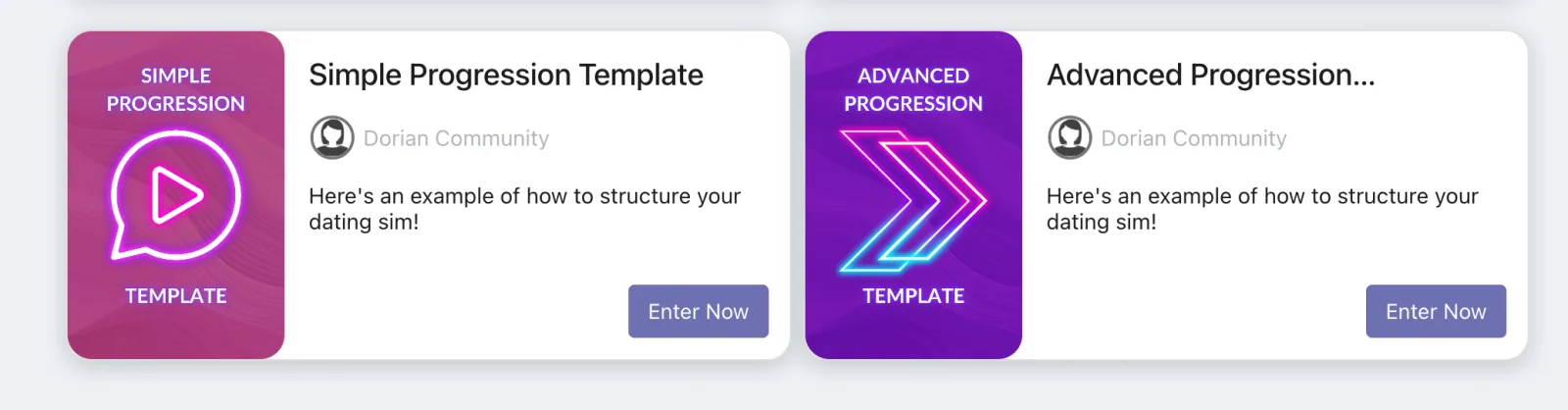
To help you follow our best practices, we created two templates using two different gameplay loops, based on some of Dorian's top games. These break down each part of what makes an engaging Episode 1, and give you a general sense of how long your episode should be.
What is a gameplay loop?
A game loop is the core cycle of actions a player repeats throughout the game. On Dorian, the most common loop relies on different features already available to you:

- Use the memory bank and relationship system to let players earn points through interactions with love interests.
- Let players level up through achievements.
- Use the text importer to write and implement long, complex scripts in the most time-efficient way possible.

Our templates offer a simpler loop and a slightly more advanced one, Simple Progression and Advanced Progression. If you'd like to try something different, you can still use these templates and adjust them to fit your own.


What Is Drop-Off?
Before we talk about building a strong Episode 1, let's talk about drop-off. Drop-off is the percentage of players who stop playing between episodes. Imagine you just published your first game:
- 1,000 players start Episode 1
- 600 players finish Episode 1
- 350 players start Episode 2
That loss in players is called drop-off. And here's the important part: drop-off is normal. It's not automatically a sign that your game is bad, it's simply how player behavior works on an interactive platform.
What can we do about drop-off?
You'll never eliminate drop-off completely, but you can reduce it significantly with a few proven rules. The best-performing Dorian games are designed to constantly reward attention and create momentum:
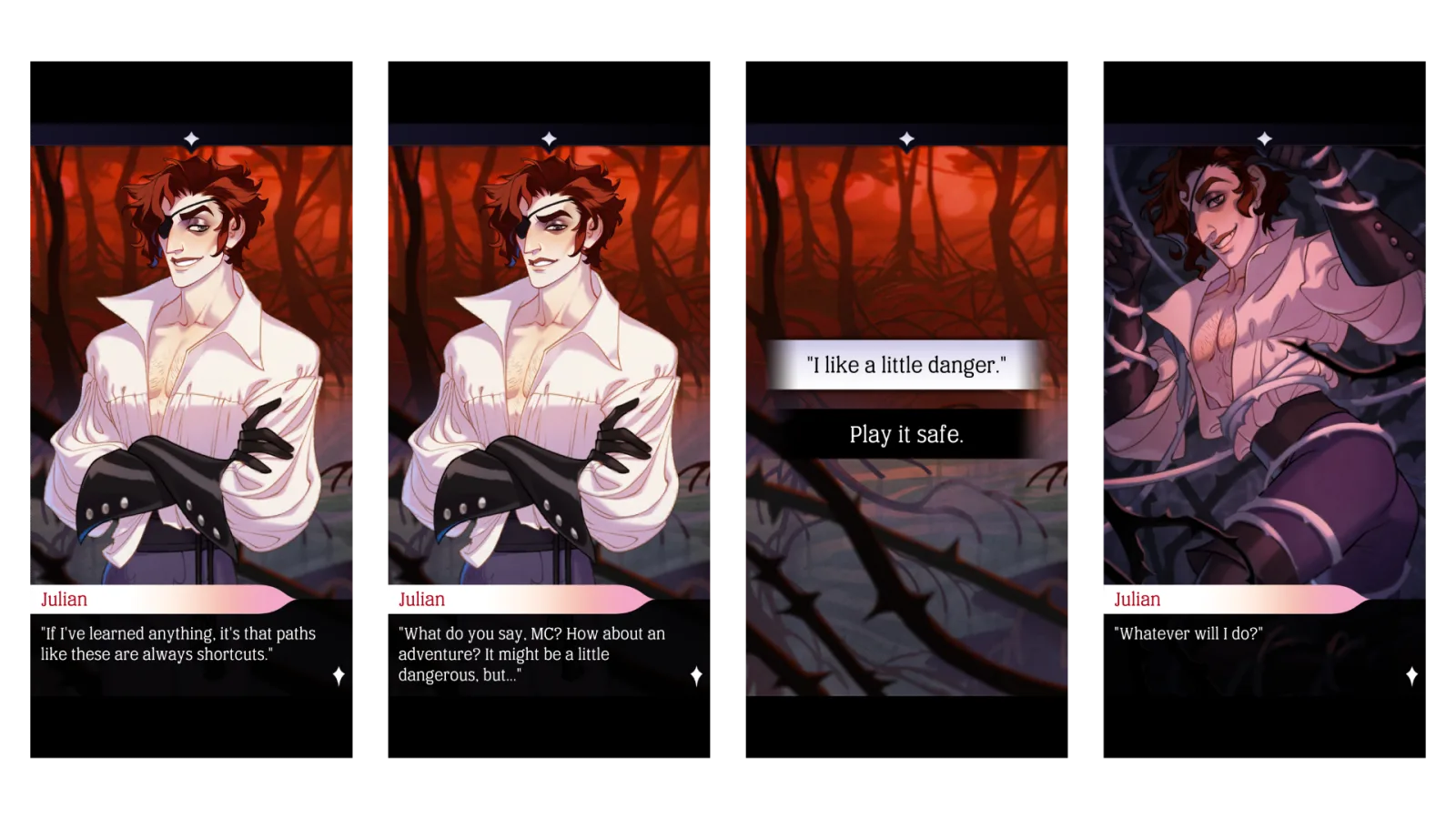
1. Give players frequent choices. If players go too long without making a choice, the experience starts feeling passive, more like reading a novel than playing a game. A good rule of thumb for beginners is to never go more than ~15 steps without a choice. Small choices matter too, especially when they establish the MC's personality, taste, or dynamic with each love interest. These help players feel ownership over their version of the MC.
2. Start in the middle of the action. Avoid slow introductions. Ask yourself: "What is the moment where the story becomes interesting?", and start there.
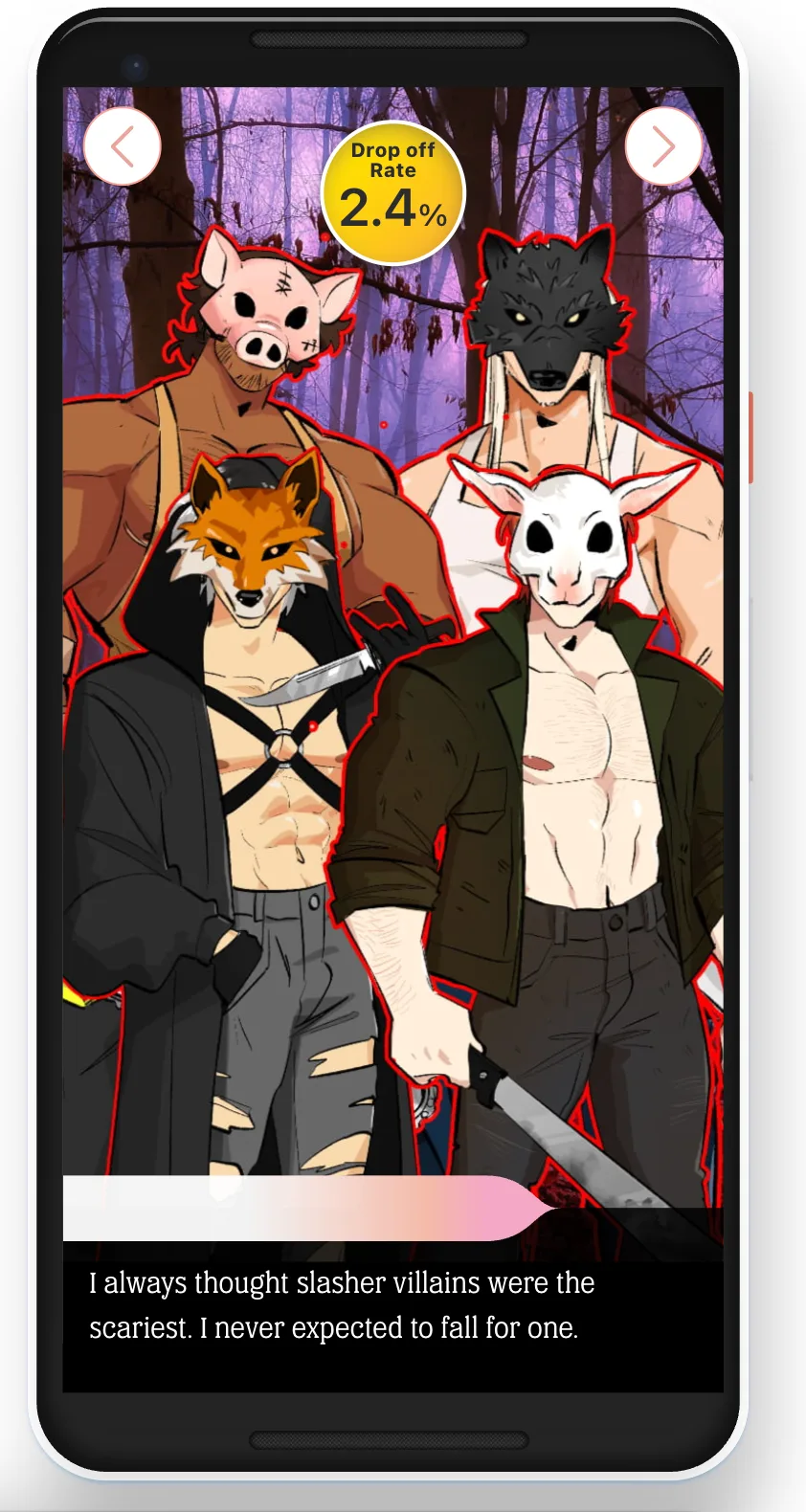
3. Show character art immediately. Players came for your characters, and in dating sims emotional attachment starts visually. Showing character art on the very first tap can make a significant difference. Don't make players wait through long narration or exposition-heavy intros.
4. Prioritize dialogue over narration. Interactive stories thrive on momentum. Long narration blocks slow pacing and create friction, especially on mobile. As a rule of thumb: if something can be shown through dialogue, show it through dialogue.
Player experience
At this stage, you want new players to be able to answer three questions:
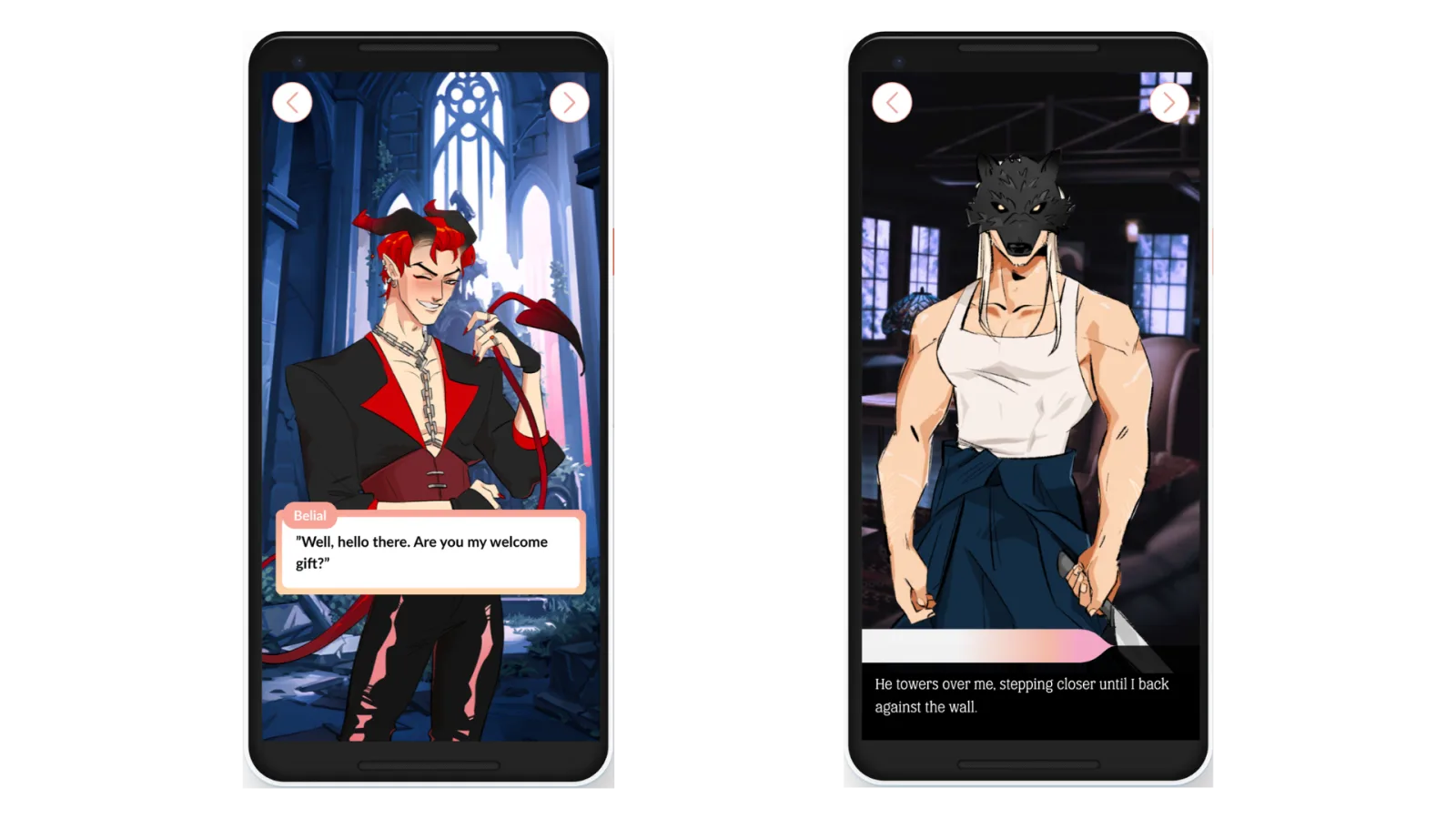
Who are the love interests?
If you completed the Character Design lesson, you already know! Now it's time to figure out the most iconic way to introduce them. Some characters are most recognizable for what they say, some for what they don't say, make a first impression wisely. (See the Academy article on developing character voices for inspiration.)
Why do I want to romance them?
This should already be built into your game's concept, and you should introduce it just as concisely in your demo as you did in your pitch. The stakes should feel immediate and personal: romance should be the solution to a problem the MC is directly experiencing *right now*, rather than distant or abstract goals like saving a character, a city, or a world before the player has any emotional attachment.
What do I get if I pay?
On Dorian, creators earn by charging Hearts for the most desirable choices in their games. Since the rest of the experience is free-to-play, a successful game depends on making premium choices feel appealing and clearly communicating their value. We do this through what we call a lead-in: the scene that leads to a premium option.
Even the most dedicated player may skip a great scene if they don't know what they're missing. The lead-in is where you tell your players:
- What they can expect from the scene
- Why it's worth their money
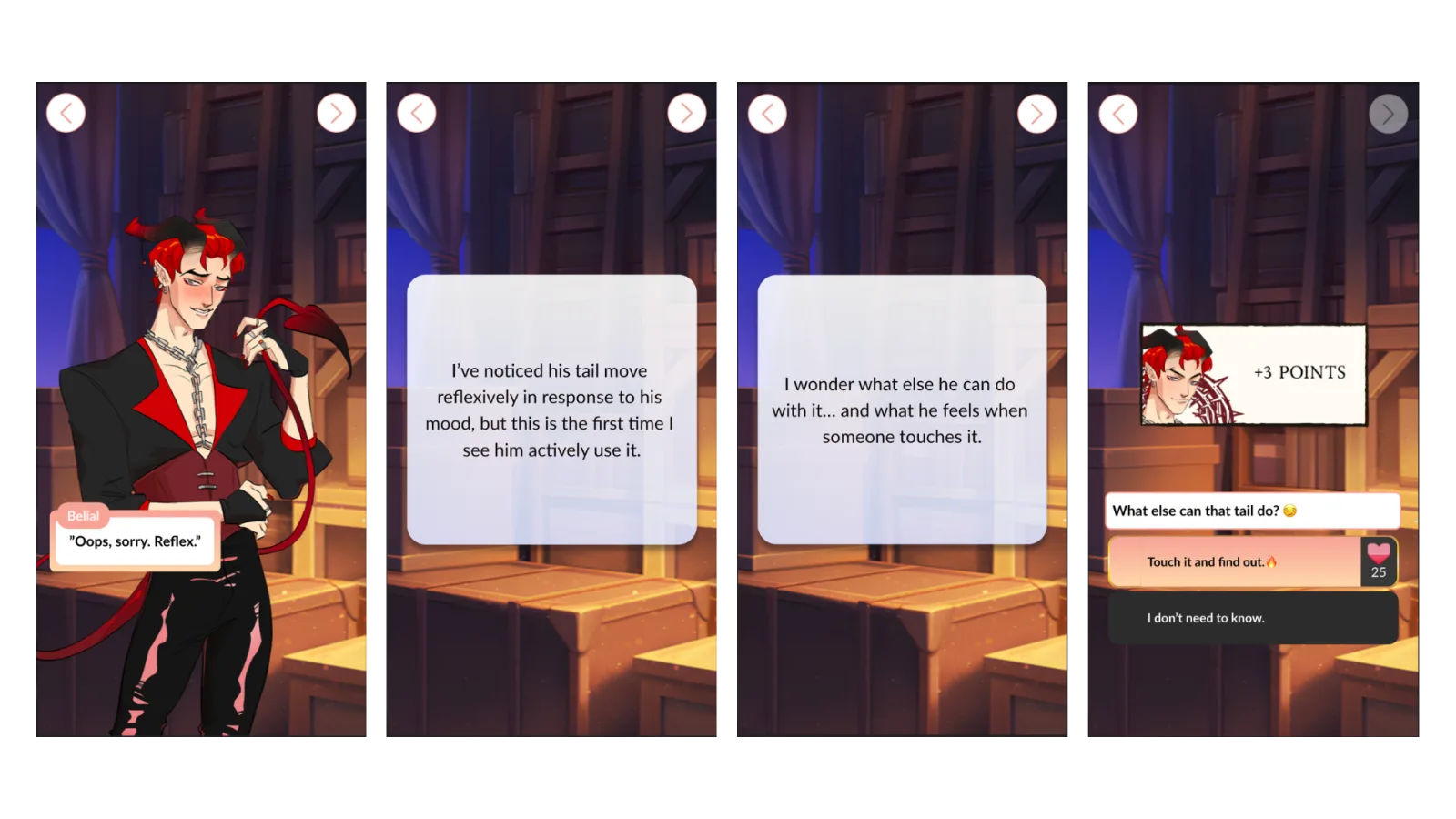
By the time players reach a premium choice, a good lead-in has told them what they'll get and why it matters, for example, that they'll earn character points, and that the scene will be fun.
Episode 1 is a tutorial
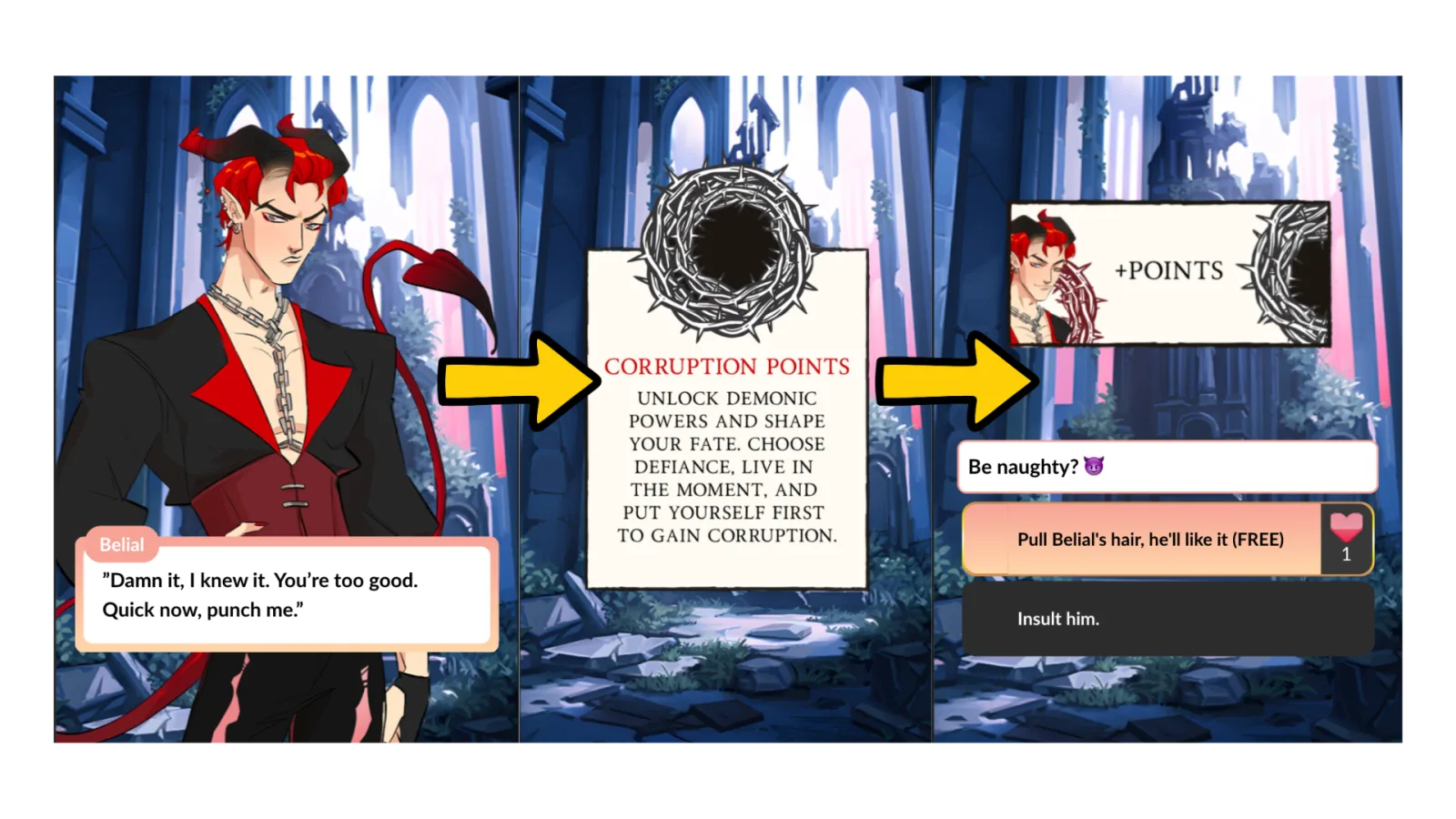
In Episode 1, you're introducing a player who knows nothing about your game to a completely new world. This may seem overwhelming, but a few tricks help: instead of delivering lore through exposition, turn it into a fun, playable moment that reinforces player agency. This is especially effective when applied to your first paid choice, use it to teach players how your mechanic works while delivering some information about the rules of the world they're in.
Episode 1 Success Checklist, check yourself
Is your opening ready?
- The first thing I see is a love interest
- The first choice is in the first 10 taps
- It starts in the middle of the action
- I avoid narration for more than 2–3 consecutive taps
- The point system is introduced early
Are your premium choices ready?
- I have at least 2 premium choices
- The first premium choice feels like a tutorial
- I monetize my secondary point system
- The player understands the value of my point system
- I have a strong lead-in for both premiums
Is your episode ready?
- The episode ends on a strong cliffhanger
- I have frequent choices, at least every 15 taps
- I introduce 3 to 4 love interests
- Each love interest has a distinct, unique tone of voice